Storymapping Super Powers: Agile 2025
I gave a talk at Agile 2025 in Denver 28-July 2025. It was my first talk post TBI, and as I’m writing, could have been my worst, my weirdest, or both. That said, here are the slides before I gave…

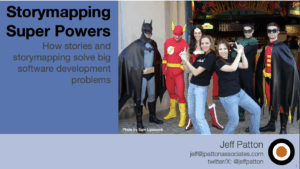
I gave a talk at Agile 2025 in Denver 28-July 2025. It was my first talk post TBI, and as I’m writing, could have been my worst, my weirdest, or both. That said, here are the slides before I gave…

The first step for any organization adopting a product operating model or making a project to product transformation is identifying their products. This article describes the simple product decomposition model I use to help organizations identify their digital products so…

I use this simple product type canvas in conjunction with the product decomposition model to identify digital products in an organization. This simple template gives every product team enough information to understand customers and users and really measure the value…

I’ve heard lots of people wrestle with defining what a product is. Those discussions always leave me confused. Because it’s a lot simpler than anyone seems to describe it. The short answer to “what is a product?” Is EVERYTHING. Everything…

This article describes the continuous product improvement cycle: the foundational model I use in teaching product development. The article describes why products continuously improve and why there’s an expectation that tech products improve faster.

I’ve got 7 areas I think about when talking to and evaluating a product manager and here they are.

This article is really some of the common mistakes I see people and teams make when they create and work with story maps. 1. Losing the story 2. Getting lost in the details 3. Worrying too much about flow, branches,…

Organizations and the people in them irrationally and addictively build and release products that often have no real value. This article gives my best explanation why.

This article describes my beliefs on what product vision is and isn’t.

This article describes the simple language I use to describe product development: opportunity, output, outcome, and impact. But more importantly it describes the tensions and unexpected implications in the model: Customer problems aren’t business problemsWe can’t directly solve business problemsOn…